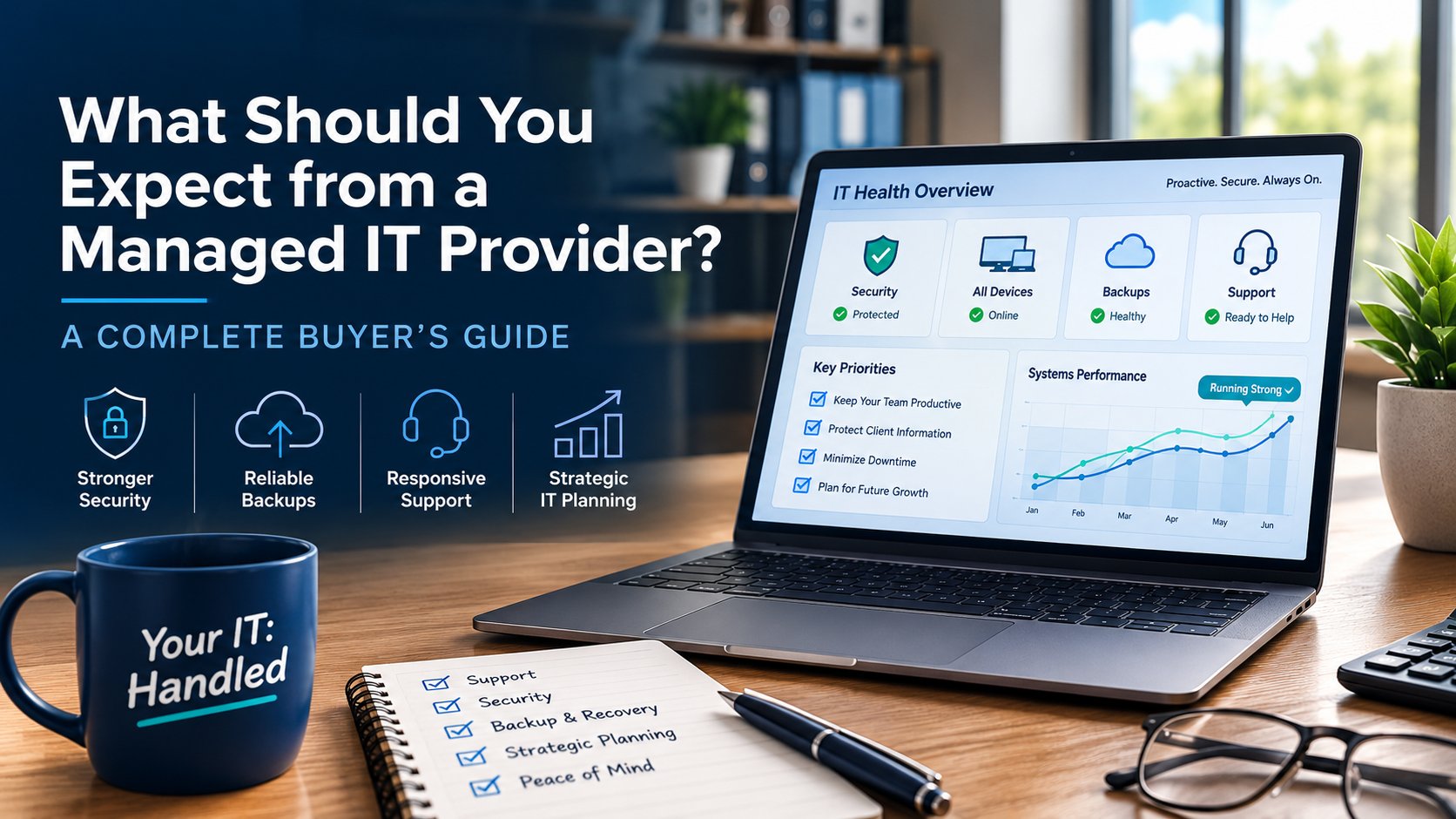
Choosing a Managed IT Services provider is one of the most important business decisions an accounting firm can make. The right partner does much more than fix computers when they break. They help protect sensitive client information, reduce downtime, improve employee productivity, plan technology investments, and align IT with your firm's long-term business goals.
Unfortunately, not all Managed Service Providers operate the same way.
Some focus almost exclusively on reactive support, while others take a proactive approach that includes cybersecurity, strategic planning, lifecycle management, and ongoing business consulting.
If you are evaluating IT providers for the first time or considering replacing your current MSP, understanding what to expect can help you make a more informed decision. If you're already questioning whether your current provider is meeting your firm's needs, our article on the warning signs that it's time to replace your Managed IT provider can help you determine whether it's time to make a change.
Managed IT Is More Than Computer Support
Many business owners still think of IT as a service they call when something stops working.
That approach is known as break-fix IT.
Under a break-fix model, support is provided only after problems occur. While this may seem less expensive initially, it often leads to more downtime, unpredictable expenses, and recurring technology issues.
Managed IT Services take a different approach.
Instead of waiting for problems, a Managed IT provider continuously monitors, maintains, and improves your technology environment to reduce the likelihood of issues before they affect your business.
The objective is not simply to repair technology.
It is to keep your business operating securely, efficiently, and with minimal disruption.
Core Services Every Managed IT Provider Should Include
Every MSP structures its services differently, but there are several capabilities every business should expect.
Responsive Help Desk Support
Employees need fast access to knowledgeable technicians when technology issues arise.
Ask potential providers:
- What are your normal support hours?
- How are emergencies handled?
- Do clients speak directly with technicians?
- What are your average response times?
Reliable support keeps employees productive and minimizes business interruptions.
Proactive Monitoring and Maintenance
Your IT provider should continuously monitor servers, workstations, firewalls, and network devices for potential issues.
This typically includes:
- Performance monitoring
- System health checks
- Patch management
- Software updates
- Hardware monitoring
Identifying issues early often prevents costly outages later.
Cybersecurity Services
Cybersecurity should no longer be considered an optional add-on.
Your Managed IT provider should help implement and maintain security controls such as:
- Multi-Factor Authentication
- Endpoint Detection and Response
- Email security
- Microsoft 365 security
- Security monitoring
- Vulnerability management
- Security awareness guidance
Many of these same controls are also becoming requirements for cyber insurance policies. As insurers continue raising security expectations, businesses that already work with a proactive MSP are often better positioned to qualify for coverage and renewals.
Protecting sensitive client information should be integrated into every aspect of IT management. These protections should be part of a comprehensive cybersecurity strategy rather than a collection of disconnected tools. Learn more about the cybersecurity services every accounting firm should expect from its IT provider.
Backup and Disaster Recovery
Businesses should never assume backups are working simply because backup software is installed.
A quality MSP should help ensure:
- Backups run successfully
- Recovery procedures are documented
- Restore testing is performed regularly
- Recovery objectives align with business needs
The ability to recover quickly after an incident is just as important as preventing one.
Vendor Management
Technology vendors often include:
- Internet providers
- Software vendors
- Phone providers
- Cloud providers
- Hardware manufacturers
Your MSP should coordinate with these vendors on your behalf whenever technical issues arise.
This saves valuable time and eliminates unnecessary frustration.
Documentation
Well-managed IT environments rely on accurate documentation.
Your provider should maintain information such as:
- Network diagrams
- Hardware inventory
- Software licensing
- Administrative accounts
- Configuration documentation
- Warranty information
Comprehensive documentation improves support quality and simplifies future planning.
Strategic Planning Should Be Part of Managed IT
One of the biggest differences between average MSPs and exceptional MSPs is strategic planning.
Technology should support business objectives.
Your provider should understand your firm's security goals, compliance obligations, and long-term business priorities. For accounting firms, IT planning increasingly includes supporting technology controls that align with industry regulations.
Your IT provider should understand:
- Your growth plans
- Upcoming business initiatives
- Budget priorities
- Security goals
- Compliance objectives
- Technology risks
This information allows IT decisions to be made proactively instead of reactively.
Rather than asking, "What broke this month?"
A strategic provider asks, "What should we improve over the next three years?"
That conversation often includes planning for future hardware replacements before aging systems become a reliability or security risk. Developing a technology lifecycle plan helps firms avoid unexpected failures while making budgeting much more predictable.
Questions Every Business Should Ask Before Hiring an MSP
Selecting an IT partner deserves careful evaluation.
Consider asking questions such as:
How quickly do you respond to support requests?
Understanding response time expectations helps establish realistic service levels.
Who answers the phone?
Will you speak directly with experienced technicians, or will calls pass through multiple levels before reaching someone who can help?
Do you outsource technical support?
Some providers outsource portions of their help desk.
Others maintain in-house technical teams.
Understanding how support is delivered helps avoid surprises later.
How do you approach cybersecurity?
Cybersecurity should extend beyond antivirus software.
Ask how the provider manages:
- Identity protection
- Endpoint security
- Microsoft 365
- Security monitoring
- User training
- Incident response
How often do we review our technology strategy?
Technology changes constantly.
Your provider should schedule regular business reviews to discuss:
- Upcoming projects
- Hardware replacement
- Security improvements
- Budget planning
- Business growth
Who owns our documentation?
Your business should always retain ownership of its technology documentation.
This helps ensure continuity regardless of future vendor relationships.
Warning Signs When Evaluating an MSP
Not every provider delivers the same level of service.
Be cautious if you encounter any of the following:
Everything Is Reactive
If the provider focuses primarily on fixing problems after they occur, long-term planning may be limited.
Cybersecurity Is an Extra Service
Security should be integrated into managed services rather than treated as an optional upgrade.
There Is No Technology Roadmap
Businesses benefit from understanding what technology investments are coming over the next several years.
Without planning, budgeting becomes unpredictable.
Documentation Is Limited
Poor documentation often leads to slower support and unnecessary risk.
No Regular Business Reviews
Technology should evolve alongside your business.
Regular planning meetings help keep technology aligned with operational goals.
Pricing Seems Too Good to Be True
Low monthly pricing sometimes excludes important services that later become additional charges.
Understanding exactly what is included helps avoid unexpected costs.
Why Strategic Planning Creates Long-Term Value
Technology decisions should never happen in isolation.
Replacing hardware, improving cybersecurity, adopting cloud services, and budgeting for future growth all work best when planned together. For many accounting firms, evaluating whether workloads belong in the cloud is also part of that long-term planning process rather than a separate technology decision.
Strategic planning helps organizations:
- Reduce unexpected expenses
- Improve budgeting
- Strengthen cybersecurity
- Extend hardware life appropriately
- Prioritize technology investments
- Reduce operational risk
Businesses that plan technology proactively often experience fewer emergencies and greater long-term stability.
How Everleap Partners With Accounting Firms
At Everleap IT, we believe Managed IT should go beyond technical support.
Our role is to help clients build secure, efficient, and scalable technology environments that support their business objectives.
Our services include:
- Responsive help desk support
- Continuous monitoring
- Microsoft 365 management
- Cybersecurity services
- Backup and disaster recovery
- Technology lifecycle planning
- Vendor management
- Strategic technology reviews
- Infrastructure documentation
- Long-term IT planning
With more than twenty years of experience managing production hosting environments, we bring an operational mindset that emphasizes reliability, consistency, and proactive planning. That experience managing business-critical systems has shaped how we approach Managed IT Services today, focusing on preventing problems before they disrupt our clients' operations.
Rather than waiting for problems, we work with clients to reduce risk, improve efficiency, and align technology with their long-term business strategy.
Choosing the Right IT Partner Is About More Than Support
Every Managed IT provider can promise fast response times.
The best providers deliver much more than technical support.
They become trusted advisors who help your business reduce risk, improve operational efficiency, strengthen cybersecurity, and make informed technology decisions.
When evaluating an MSP, look beyond pricing and help desk metrics.
Ask whether the provider understands your business, plans for the future, and helps technology become a competitive advantage instead of an operational burden.
Looking for a More Strategic IT Partner?
Everleap IT helps build secure, reliable, and scalable technology environments for accounting firms and financial services organizations throughout California's Inland Empire, including Rancho Cucamonga, Ontario, Claremont, and nearby communities.
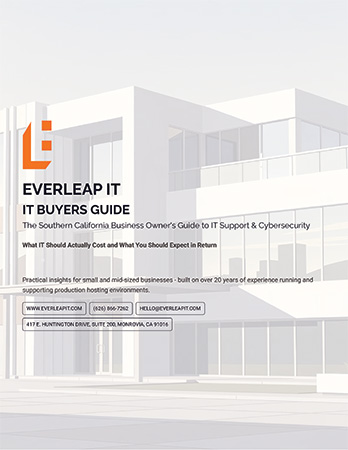
If you're still comparing Managed IT providers, our free IT Buyer's Guide walks through the questions every business should ask before signing a contract, helping you evaluate providers beyond price alone. It's a downloadable practical resource for business owners who want to make a confident, informed decision.
From proactive support and cybersecurity to Microsoft 365 management and long-term technology planning, Everleap IT helps clients align IT with their business goals, so technology supports growth instead of slowing it down. Feel free to book an appointment to discuss your IT situation.