
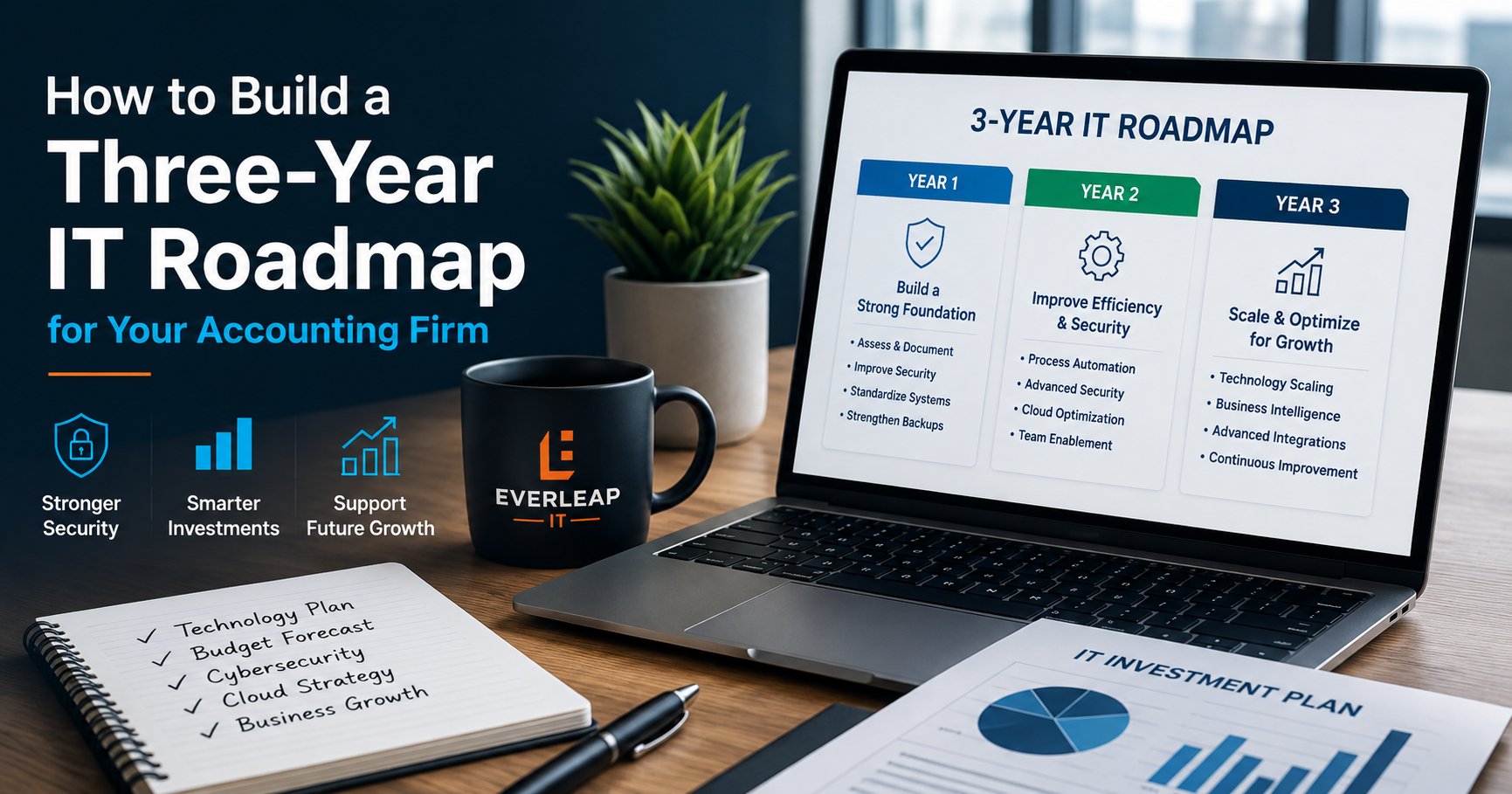
Successful accounting firms don't make technology decisions one purchase at a time.
Instead of replacing computers only after they fail or investing in cybersecurity after an incident occurs, they create technology roadmaps that align IT investments with business goals, security priorities, and future growth.
A three-year IT roadmap provides a structured plan for improving technology over time. It helps firms budget more effectively, reduce unexpected expenses, improve cybersecurity, and ensure technology supports the business instead of becoming an obstacle.
Whether your firm has five employees or fifty, developing a long-term technology strategy can improve operational efficiency and reduce risk while creating a more predictable IT budget.
Why Every Accounting Firm Needs an IT Roadmap
Technology touches nearly every part of an accounting firm's operations.
Employees depend on computers, cloud applications, internet connectivity, cybersecurity, document management systems, and communication tools every day.
Without a long-term plan, technology decisions often become reactive.
Common examples include:
- Replacing computers only after hardware failures
- Delaying cybersecurity improvements until insurance requirements change
- Purchasing software without evaluating long-term compatibility
- Making emergency infrastructure upgrades during tax season
- Struggling to budget for major technology investments
An IT roadmap shifts technology from reactive spending to proactive planning.
Instead of asking, "What broke this month?"
Your firm begins asking, "What should we improve over the next three years?"
Benefits of a Three-Year Technology Plan
A well-designed roadmap creates business value beyond the IT department.
More Predictable Budgeting
Large technology purchases become easier to manage when they are planned in advance.
Instead of unexpected expenses, firms can spread investments over multiple years and avoid budget surprises.
Improved Cybersecurity
Cybersecurity improvements rarely happen all at once. Building a mature security program requires implementing layered protections over time, beginning with the highest-risk areas first. A comprehensive cybersecurity strategy typically includes identity protection, endpoint security, email protection, monitoring, backups, and employee awareness training.
A roadmap allows organizations to prioritize security initiatives based on risk and business impact.
Examples include:
- Multi-Factor Authentication
- Endpoint Detection and Response
- Microsoft 365 security
- Identity management
- Security awareness training
- Backup improvements
Planning these initiatives over time makes implementation more manageable.
Reduced Downtime
Replacing aging equipment before it fails reduces unexpected interruptions and improves employee productivity.
Technology becomes more reliable because upgrades happen according to a schedule rather than during emergencies.
Better Support for Business Growth
Technology should enable growth, not limit it.
A roadmap helps prepare for:
- New employees
- Additional office locations
- Remote work
- Cloud adoption
- New business applications
- Increased client demands
Planning ahead reduces the need for rushed technology decisions.
What Should Be Included in an IT Roadmap?
A comprehensive roadmap looks beyond computers and servers.
It should address every major area of the technology environment.
Hardware Lifecycle Planning
Document when laptops, desktops, servers, firewalls, switches, and wireless equipment should be evaluated for replacement.
Planning hardware refreshes helps maintain reliability while avoiding emergency purchases. Establishing a predictable replacement schedule also helps firms budget more effectively and reduce unexpected downtime. If you're wondering what an appropriate replacement cycle looks like, our guide on How Often Should Accounting Firms Replace Computers and Servers? explains how to build a practical hardware lifecycle strategy.
Cybersecurity Improvements
Security initiatives should be prioritized according to business risk.
Examples include:
- Identity protection
- Multi-Factor Authentication
- Endpoint protection
- Email security
- Security monitoring
- Password management
- Backup verification
Cybersecurity is not a one-time project.
It is an ongoing process of continuous improvement.
Cloud Strategy
Cloud adoption should be evaluated strategically rather than assuming every workload belongs in the cloud. Each application should be evaluated based on security, performance, compliance, and business requirements. Our guide on Should Your Accounting Firm Move to the Cloud? walks through the factors firms should evaluate before making that decision.
Consider:
- Microsoft 365
- SharePoint
- Azure
- Cloud backups
- Remote access
- Hybrid infrastructure
Every application should be assessed individually to determine the most appropriate deployment model.
Compliance and Risk Management
Many accounting firms must consider client security expectations, regulatory obligations, and cyber insurance requirements. Insurance carriers continue raising minimum security standards before issuing or renewing policies. Understanding how these requirements are evolving can help firms prioritize future security investments.
A roadmap should include initiatives that strengthen the firm's overall security posture while supporting broader compliance objectives.
Examples include:
- Security documentation
- Access management
- Data protection
- Audit readiness
- Business continuity planning
Business Applications
Software should be reviewed regularly.
Consider:
- Version upgrades
- Vendor support timelines
- Licensing changes
- Integration opportunities
- Automation improvements
Business applications should evolve alongside the organization.
Infrastructure Improvements
Infrastructure planning may include:
- Internet upgrades
- Firewall replacement
- Wireless improvements
- Network modernization
- Phone systems
- Conference room technology
Reliable infrastructure supports every other technology investment.
A Practical Three-Year Planning Framework
Every firm's roadmap will be unique, but this framework provides a practical starting point.
Year One: Build a Strong Foundation
The first year should focus on reducing immediate risk and standardizing the technology environment.
Typical priorities include:
- Complete technology assessment
- Hardware inventory
- Documentation
- Multi-Factor Authentication
- Endpoint protection
- Microsoft 365 security review
- Backup verification
- Patch management
- Standardized hardware policies
Many of these foundational projects are also included in our Complete IT Checklist for Starting or Growing a CPA Firm, making it a useful planning resource for firms establishing or standardizing their technology environment.
The objective is to create a stable, secure foundation.
Year Two: Improve Efficiency and Security
Once foundational improvements are complete, the focus shifts toward optimization.
Potential initiatives include:
- Device lifecycle replacements
- Cloud migration projects
- Process automation
- Identity management improvements
- Network modernization
- Wireless upgrades
- Security monitoring enhancements
- Employee security awareness training
These projects improve operational efficiency while strengthening long-term security.
Year Three: Support Future Growth
Technology planning should anticipate where the business is heading.
Year Three initiatives may include:
- Office expansion
- Cloud infrastructure optimization
- Business continuity improvements
- Disaster recovery testing
- Advanced cybersecurity initiatives
- AI and workflow automation
- Capacity planning
- Future budgeting
Technology should remain aligned with business strategy as the organization grows.
Review the Roadmap Every Quarter
An IT roadmap should never be considered a static document.
Businesses evolve.
Technology changes.
Security threats continue to develop.
Quarterly technology reviews provide an opportunity to evaluate:
- Completed projects
- New business priorities
- Budget changes
- Emerging cybersecurity risks
- Vendor updates
- Hardware lifecycle adjustments
Regular reviews help ensure technology investments continue supporting business objectives.
Strategic Planning Creates Better Technology Decisions
One of the most valuable benefits of working with a proactive Managed Service Provider is access to ongoing strategic planning. While day-to-day support is important, a quality MSP should also help clients plan technology investments, manage cybersecurity risk, and align IT with business objectives. If you're evaluating providers, our article on What Should You Expect From a Managed IT Provider? explains what strategic services should be included beyond basic help desk support.
Instead of responding to technology emergencies, businesses can evaluate opportunities before they become urgent.
Questions worth discussing regularly include:
- Are we budgeting appropriately for hardware replacement?
- Are our cybersecurity controls keeping pace with current threats?
- Which business applications should we modernize?
- Does our cloud strategy still align with our operations?
- What technology investments will provide the greatest business value next year?
These conversations create better long-term outcomes than reacting only when problems arise.
How Everleap Helps Clients Build Technology Roadmaps
At Everleap IT, strategic planning is an essential part of managed IT services.
We work with accounting firms to understand their business goals before recommending technology investments.
Our planning process includes:
- Comprehensive technology assessments
- Hardware lifecycle planning
- Cybersecurity reviews
- Microsoft 365 optimization
- Cloud strategy
- Budget forecasting
- Infrastructure planning
- Vendor coordination
- Quarterly technology reviews
With more than twenty years of experience managing production hosting environments, we understand the value of disciplined planning, operational consistency, and continuous improvement. That operational experience shapes how we design, maintain, and support business IT environments today.
Our objective is to help clients make informed technology decisions that reduce risk, improve efficiency, and support sustainable business growth.
Technology Planning Is a Competitive Advantage
Technology should not be viewed as a series of independent purchases.
It should be managed as a strategic business asset that supports productivity, protects client information, and enables long-term growth.
A three-year IT roadmap helps accounting firms make smarter decisions, reduce operational risk, improve budgeting, and ensure technology investments deliver lasting business value.
The firms that consistently outperform their competitors are often the ones that plan ahead rather than react to change.
Ready to Build Your Technology Roadmap?
Everleap IT helps develop practical technology strategies that align IT investments with business goals for accounting firms and financial services organizations throughout California's Inland Empire, including Rancho Cucamonga, Upland, Ontario, Chino, Claremont, and nearby communities. Through strategic planning, cybersecurity guidance, lifecycle management, and ongoing technology reviews, we help clients build secure, scalable environments that support long-term success.
If your technology decisions have become reactive instead of strategic, we can help you build a roadmap that provides clarity, confidence, and a plan for the future. Feel free to book a meeting to discuss your IT situation and schedule a technology assessment.